Should You Use Forged or Cast Irons?

Irons make up a big part of your golf bag, so finding the right set really matters. If you’re thinking about upgrading or replacing your irons, it helps to understand how they’re made and why that can affect your performance on the course. Whether you’re a newer player just starting out or hitting the course every weekend and looking for a premium option, this guide breaks down the differences between cast and forged irons so you can shop with confidence.
What Are Forged Irons?
Forged irons start as a single billet of carbon steel or soft stainless steel. The metal is heated, then pressed or hammered into shape. After forging, the head is machined, ground, and polished to exact loft, lie, and weight specs. This process compresses the grain structure, which many players associate with a more consistent feel at impact.
If you enjoy dialing in approach shots and value precision over forgiveness, forged irons may be worth a look.
Benefits of Forged Irons
- Feel and feedback - A softer, connected sensation that tells you how well you struck the ball
- Workability - Narrower sole and compact head shapes make it easier to shape shots and control trajectory for distance and spin
- Fitting flexibility - More accommodating to loft and lie adjustments without compromising integrity
What Are Cast Irons?
Cast irons are made by pouring molten metal into a mold. Most game-improvement and many players-distance models use investment casting with stainless steel alloys. Casting makes it easier to create complex clubhead designs that include features like deep cavities, variable face thickness, and multi-material construction. Cast irons often use tungsten weighting to push mass to the perimeter of the clubhead, which can help improve forgiveness and ball speed on off-center strikes.
If your goal is to get more consistent performance on mis-hits and gain added launch and distance, cast irons can help make the game more enjoyable.
Benefits of Cast Irons
- Forgiveness - More stable on off-center hits, keeping dispersion tighter
- Launch and distance - Designs that help the ball get up and carry farther
- Value - High-tech performance often at a lower price point than forged
Forged vs Cast Irons: Key Differences
Both styles can deliver quality performance, but the differences between the two are noticeable enough that you may play better with one over the other. This overview helps clarify the difference between forged and cast irons in everyday play.
Feel & Feedback
Forged Iron - Softer, more detailed feedback. Clearer sense of strike quality.
Cast Iron - Solid feel with more emphasis on stability across the face.
Workability & Control
Forged Iron - Easier to shape shots; precise trajectory and distance control.
Forgiveness
Cast Iron - Designed for straight, consistent ball flights.
Forged Iron - Designed for straight, consistent ball flights.
Adjustability
Forged Iron - Generally easier to bend for loft/lie adjustments.
Cast Iron - Some models are bendable; very hard or multi-material heads may be limited.
Durability
Forged Iron - Carbon steel shows bag chatter more easily; performance remains strong.
Cast Iron - Stainless alloys resist cosmetic wear well.
Price and Value
Forged Iron - Higher cost due to labor-intensive manufacturing.
Cast Iron - Strong value with advanced designs at lower costs.
How Clubhead Design Shapes Performance
While the manufacturing process of the club can make a difference, it’s important to remember that head style also has a big influence on how a club plays. Before buying an iron, be sure to check whether it’s a blade or cavity back.
- Blades - Often forged, compact, and minimal offset. Maximum feedback and workability with the least forgiveness.
- Cavity Backs - Common in cast and increasingly found in forged multi-piece constructions. Perimeter weighting adds stability and forgiveness.
Our Favorite Forged Irons

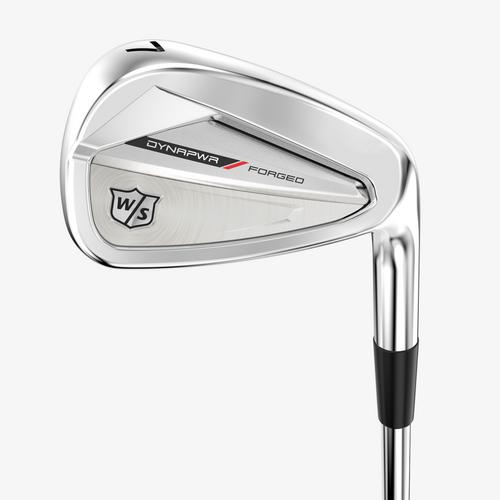

Our Favorite Cast Irons


Should You Choose Cast Or Forged Irons?
There’s no one-size-fits-all answer, but there are general guidelines we like to recommend to golfers who are unsure on which iron option is right for them.
- Choose cast irons if you want higher launch, more stability across the face, and dependable distance, even when contact isn’t perfect.
- Choose forged irons if you value feel, feedback, and the ability to shape shots, and can consistently make clean contact.
If you’d like more information on what goes into finding the perfect iron, check out our Irons Buying Guide.
Find Your Next Favorite Iron at PGA TOUR Superstore
Whether an iron is cast or forged will change how it feels and plays in your hands. If you’re unsure which would be a better fit, stop by your local PGA TOUR Superstore.
Our experts will guide you through the selection process and ensure you find a club that matches your swing and playstyle. Schedule a practice bay or STUDIO fitting session to try out the newest irons and leave feeling confident that you found the right club.